How to Regrow Hair on a Thinning Crown: Is Laser Therapy an Option
A thinning crown can sometimes regrow hair, and low-level laser therapy may be one option. To understand how to regrow hair on a thinning crown, first identify the cause, since pattern hair loss, temporary shedding, and scalp conditions call for different approaches.If you’re wondering how to regrow…
A thinning crown can sometimes regrow hair, and low-level laser therapy may be one option. To understand how to regrow hair on a thinning crown, first identify the cause, since pattern hair loss, temporary shedding, and scalp conditions call for different approaches.
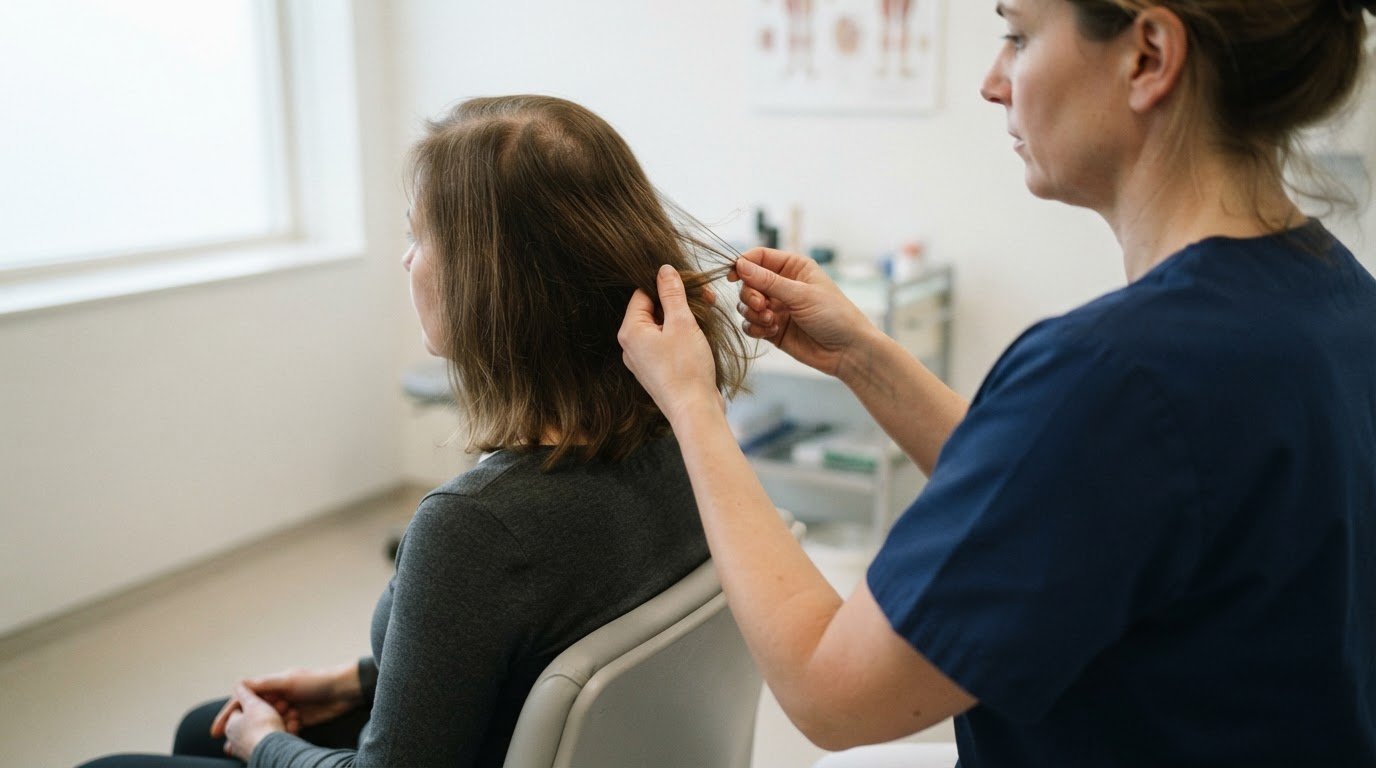
If you’re wondering how to regrow hair on a thinning crown, start by finding out what is causing the change. A physician or dermatologist can assess your scalp and discuss appropriate next steps. This article explains possible causes, where laser therapy fits, and how professional guidance can help you choose a measured routine and track changes.
Key Takeaways
- Low-level laser therapy may be an option for some types of hair loss; learn where it fits in a broader care plan.
- Regrowth on the crown is possible in some cases, but the right approach depends on what is causing the thinning.
- Notice whether thinning is gradual or sudden, as the pattern can help guide an evaluation.
- A physician or dermatologist can assess your scalp and help you choose appropriate next steps before starting treatment.
Table of Contents
1. Low-level laser therapy
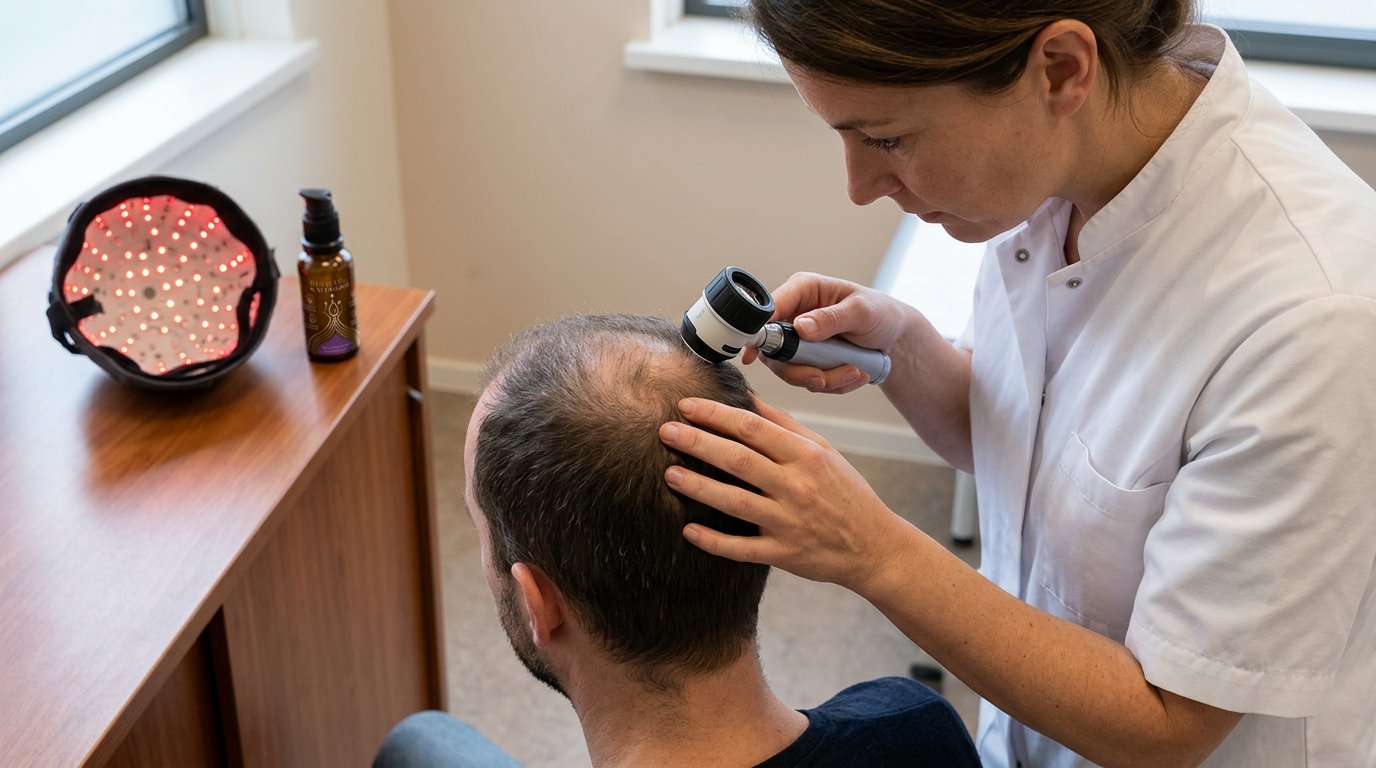
Low-level laser therapy uses devices such as red-light combs and helmets to direct light at the scalp. It is used for male pattern hair loss and hair loss associated with chemotherapy, among other conditions. For a thinning crown, its relevance depends on whether the cause is one the therapy may address. A physician can assess your scalp and help determine whether pattern hair loss or another form of alopecia may be involved.
Low-level laser therapy is a device-based approach, not a medication or supplement. It targets the scalp, while topical treatments are applied to the skin and supplements are taken orally. Each has a different role, and one should not be assumed to replace another. Hair follicles respond differently depending on why thinning occurs, so identifying the cause is the first step.
If you’re considering a home device, discuss your crown thinning with a physician or dermatologist first. Note when you first noticed it, whether shedding has changed, and what treatments or supplements you use. Ask whether laser therapy fits the suspected cause and your overall care plan. Follow the device instructions, and avoid starting several treatments at once without clinical guidance. This makes it easier to track your routine and any changes.
Set a consistent baseline before judging progress: photograph your crown under the same lighting and from the same angle. Repeat the image after 60 days to compare visible coverage. That interval helps you look for a pattern rather than relying on day-to-day impressions. Keep notes on device use and any scalp changes, then share them with your physician. Laser therapy is one possible part of a hair-growth plan, not a diagnosis; identifying the cause of alopecia remains central to choosing suitable care.
2. Can you regrow hair on the crown?
Yes, crown hair can regrow when follicles remain capable of producing hair, and the right treatment depends on the cause. If you’re considering how to regrow hair on a thinning crown, topical minoxidil is one option for androgenetic hair loss. In the United States, the FDA has approved topical minoxidil for hair loss in men and women. Daily use for at least six to nine months may be needed before improvement appears.
Oral minoxidil is a separate, off-label option at 2.5 to 5 mg per day when topical use is insufficient or causes irritation. A physician should guide medication choices. Oral finasteride is available by prescription only and isn’t appropriate for everyone. Benefits from minoxidil or finasteride may diminish after treatment stops, so discuss ongoing use before starting.
Microneedling combined with topical minoxidil may offer another approach. A 2025 systematic review and meta-analysis found better hair counts with the combination than with minoxidil alone. Scalp devices typically have needles 0.5 to 1.5 mm long. Since microneedling punctures the skin, consult a physician about its suitability and safe use before combining it with medication.
A hair transplant can restore crown coverage by moving skin with fuller hair follicles into areas with fewer follicles. For anyone asking how to regrow hair on a thinning crown, choosing between medication, microneedling, and surgery depends on the cause and clinical assessment. Minoxidil can cause skin irritation and, in some cases, dermatitis. Ask a physician about precautions, particularly if you take other medications or have health conditions. A plan should include treatment, follow-up, and consistent monitoring.
3. Diagnosing crown thinning and identifying possible causes
The location and pace of hair loss help a doctor assess its likely cause. Gradual thinning at the crown can fit androgenetic alopecia, also called pattern hair loss. In Caucasian men, some androgenetic alopecia is reported in about 50% by age 50 and around 80% by age 70. These population figures describe a pattern, not an individual diagnosis or a prediction of your hair growth.
The Norwood Scale classifies male pattern hair loss across seven stages. A clinician assesses the crown alongside the hairline and the wider scalp, rather than judging one area alone. Changes in hair caliber can add another clue: a review reported variability in around 94% of people with androgenetic alopecia. Your history and the timing of shedding help put those observations in context.
Other causes can produce different patterns. Stress-related telogen effluvium can increase shedding when follicles enter a resting phase; it usually improves within three to six months after the cause resolves or is treated. Persistent pulling from tight hairstyles can damage follicles and may lead to lasting hair loss. Gradual patterned thinning, increased shedding, and loss where tension is applied suggest different possibilities.
Before an appointment, note when you first noticed the change, whether shedding has increased, and any recent stress or hairstyle changes. A physician or dermatologist can examine your scalp and decide whether further assessment is appropriate. These details can help distinguish a temporary trigger from ongoing pattern loss and guide the next steps.
A hair transplant is a surgical option that moves skin containing fuller hair follicles to areas with fewer follicles. Whether it is relevant depends on the diagnosed cause, the distribution of thinning, and the available donor area. Get a diagnosis before deciding on a procedure, medication, or other approach, so treatment addresses the underlying pattern rather than only the visible crown.
4. Consulting a physician or dermatologist
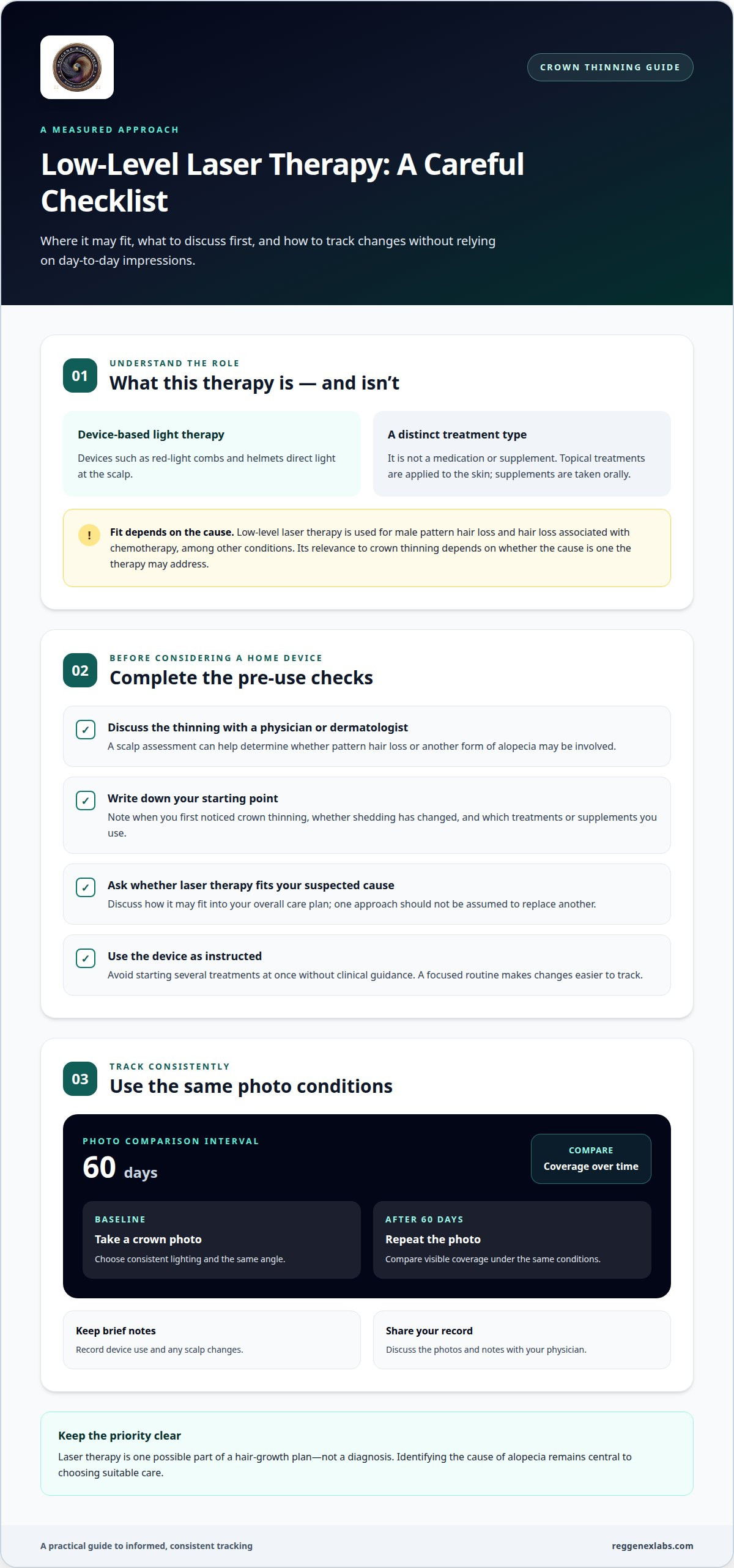
See a dermatologist if you notice early crown thinning, a widening area, or persistent shedding. An examination can distinguish androgenetic alopecia from other causes and help guide treatment choices before you commit to a routine. A physician can also assess whether a hair transplant is relevant, since the cause and pattern of loss matter when planning next steps.
A scalp assessment may include trichoscopy. A dermatologist’s trichoscope magnifies the scalp by 10x to 70x, helping examine hair shafts and follicles closely. You can prepare by noting when thinning began, how it has changed, and which medications or supplements you take. Bring examples of recent changes, such as a new medicine or a period of increased shedding.
Evaluation can differ for women and men. For women, a physician may consider vitamin levels, hormonal factors, and anemia as part of the assessment. These tests can help identify possible underlying causes rather than treating crown thinning in isolation. Supplements have no solid evidence that they make hair grow; consult a primary care provider before starting them, especially if you take medications.
Ask the clinician to explain the suspected cause, the purpose of each proposed treatment, and how progress will be assessed. If you have androgenetic alopecia, discuss whether ongoing treatment is needed to maintain results. Ask how to handle irritation or other side effects, and what findings would prompt a change in plan. Treatments may support regrowth or slow progression, but they cannot reverse every cause or restore follicles that no longer function.
Get a physician’s assessment before using a scalp derma roller alongside topical treatments. Microneedling creates tiny punctures in the skin, so technique, scalp condition, and treatment timing matter. Use your appointment to decide whether it belongs in your care plan, rather than adding it without guidance.
ReggeneX Labs: ReggeneX Vitalixir Hair Regrowth Serum
ReggeneX Vitalixir Hair Regrowth Serum offers a topical option to support a hair-regrowth routine for thinning areas such as the crown. Use it as part of consistent scalp care, alongside a plan suited to the cause of your hair loss.
If you’re unsure how to structure your routine, the ReggeneX Vitalixir Hair & Scalp Consultation offers a personalized evaluation and routine recommendations. ReggeneX Vitalixir Shampoo and ReggeneX Vitalixir Conditioner can also fit into your hair-care steps. Cosmetic care does not replace a physician’s assessment or prescribed treatment when a medical cause is suspected.
For guidance on choosing a routine, contact ReggeneX Labs.
Build a routine you can sustain
Your next step is to build a routine that fits your scalp, daily habits, and treatment plan. A thoughtful approach to how to regrow hair on a thinning crown starts with clear priorities: follow medical advice, use your care consistently, and track changes over time. Avoid changing several parts of your routine at once, so you can make informed decisions about what suits you.
ReggeneX Labs’ team can help you consider a practical hair-care routine alongside your broader plan. If you’re ready to discuss your needs, contact ReggeneX Labs. Take the next step with care, clarity, and a routine you can maintain.
Frequently Asked Questions
Can you regrow hair on the crown?
Yes, crown hair can regrow when follicles remain capable of producing hair and treatment matches the cause. For pattern hair loss, topical minoxidil is an established option; daily use requires consistency, not sporadic application. Photograph your crown in consistent lighting, then discuss the pattern and your treatment history with a physician before changing your routine.
Balding Crown: Causes and Can It Be Reversed?
A thinning crown does not automatically mean permanent baldness. Pattern hair loss often progresses gradually, while stress-related shedding can be temporary and tight hairstyles can injure follicles through traction. Whether hair returns depends on the cause and follicle condition. A dermatologist can distinguish these patterns and explain whether treatment aims to stimulate growth, limit further loss, or address a temporary trigger.
Does a thinning crown mean baldness?
No. Visible scalp at the crown signals reduced coverage, not necessarily complete loss of hair follicles. For example, the natural hair whorl can make the scalp more noticeable when hair is parted or wet. Compare photographs taken in the same light and from the same angle. Arrange an assessment if the area is widening or shedding continues, since early evaluation can help identify the cause.
Realistic Timeline: When Will You See Regrowth?
Regrowth timing depends on the cause and treatment. With topical minoxidil, daily use for at least six to nine months is typically needed before improvement appears. With telogen effluvium, improvement follows resolution or treatment of its cause, usually within three to six months. Track progress with consistent photographs rather than judging day-to-day changes.
What are the most common causes of hair loss?
Common causes include androgenetic alopecia, stress-related telogen effluvium, and persistent pulling from tight hairstyles. These patterns differ: androgenetic alopecia tends to affect specific scalp areas, while telogen effluvium increases shedding after a trigger. Ongoing tension can damage follicles. Noting when the loss began and whether it is patterned, diffuse, or patchy can help a clinician narrow down the likely cause.
When should you seek a solution for hair loss?
Seek medical advice if you notice crown thinning, persistent shedding, or a patch of hair loss. Early assessment can identify the cause before you choose a treatment. Before starting medication, supplements, or a scalp device, tell your physician what you already take or use. Note when the change began and any recent shifts in your routine or health.