Widening Part Line in Women: Causes and Treatment Options
Female pattern hair loss affects roughly 40 percent of women by age 50, but it isn’t the only reason a part may widen. The causes of a widening part line in women can include gradual pattern hair loss, temporary shedding after a health or stress trigger, hormonal or thyroid changes, nutritional defi…
Female pattern hair loss affects roughly 40 percent of women by age 50, but it isn’t the only reason a part may widen. The causes of a widening part line in women can include gradual pattern hair loss, temporary shedding after a health or stress trigger, hormonal or thyroid changes, nutritional deficiencies, and hairstyles that place repeated tension on hair follicles; the right fix depends on the cause.
If you’ve noticed more scalp showing along your part, the change can feel unsettling, especially when it’s hard to tell whether it signals ongoing thinning or a temporary shift. This guide explains how to recognize common patterns, when shedding conditions may be involved, and which care approaches or medication options may help.
You’ll also learn why a scalp and hair assessment can clarify the next steps, from addressing a possible trigger to discussing treatments such as minoxidil with a healthcare professional.
Key Takeaways
- A widening part can reflect gradual pattern hair loss or shedding linked to a temporary trigger; identifying the pattern helps guide the next step.
- Gentler styling and less tension on hair follicles may help reduce avoidable stress while you address the cause.
- Minoxidil and prescription medications are options to discuss with a healthcare professional, based on your health and hair-loss pattern.
- Sudden heavy shedding, scalp discomfort, smooth patches, or rapid widening are reasons to seek a professional assessment.
Table of Contents
What causes a wide hair parting?
Yes, a widening part can be a sign of female pattern hair loss, also called androgenetic alopecia. To understand possible causes and fixes, first notice how the change develops and whether it comes with increased shedding or other scalp symptoms.
Female Pattern Hair Loss
Female pattern hair loss is a gradual reduction in hair density that can make the central part more visible. It becomes more common with age: it affects 12% of women aged 20-29 and roughly 40 percent by age 50. Those figures describe patterns across groups, not a diagnosis for an individual. Family history can also help explain why a particular pattern develops.
Hair-Care Practices That Contribute to Thinning
Hair care can affect how full the part appears, even when it isn’t the underlying cause. A textured bob, face-framing layers, or soft crown layers can create the appearance of more volume around the part. A gentle, sulfate-free shampoo may help reduce scalp irritation. These cosmetic choices change presentation, not the activity of hair follicles, so they’re best viewed as supportive rather than regrowth treatments.
When weighing fixes for a widening part line in women, consider what each option can realistically do. Styling and haircut choices can camouflage visible scalp, while treatment depends on the cause of hair loss. Hair transplantation may suit some cases of persistent thinning, but it moves follicles to an area with reduced density rather than addressing the underlying cause or preventing thinning elsewhere. A professional assessment can help determine whether that approach fits the pattern and your goals.
Minoxidil and prescription medications
Minoxidil is a treatment option for female pattern hair loss that acts on scalp follicles. Topical options include a 2% solution applied twice daily and 5% foam applied once daily. Follow the product directions and keep the routine consistent; changing the amount or frequency can affect how treatment is used.
Temporary increased shedding can happen during the first several weeks of topical minoxidil use. It can also take at least 6 months of consistent use for hair-loss treatments to produce noticeable results. Stopping minoxidil can allow genetically susceptible hair to resume thinning, so consider ongoing use and treatment goals before starting.
Low-dose oral minoxidil is a prescription pill taken once a day. Unlike topical minoxidil, it is taken by mouth. A healthcare provider considers your health, other medications, potential side effects, and monitoring needs before discussing it. Family-planning considerations also matter when weighing hair-loss medication.
Finasteride is another medication a healthcare provider may consider for female pattern baldness, sometimes alongside ketoconazole 2% shampoo. Prescription choices depend on the cause and pattern of hair loss, as well as potential side effects and monitoring. Minoxidil and finasteride are not interchangeable; the appropriate option depends on these factors.
Nutrient supplements address a different issue. They may be relevant when a deficiency contributes to hair loss, but may be unnecessary or unsuitable without a related need. A clinician can assess whether a deficiency is likely before you add a supplement. ReggeneX Vitalixir Supplements can support a hair-care routine, but they do not replace assessing the cause of thinning.
Risks vary by medication and individual health factors. Topical minoxidil can cause temporary shedding during the first several weeks. Prescription treatments also require consideration of possible side effects, monitoring, and family-planning needs.
Telogen effluvium and other causes of shedding
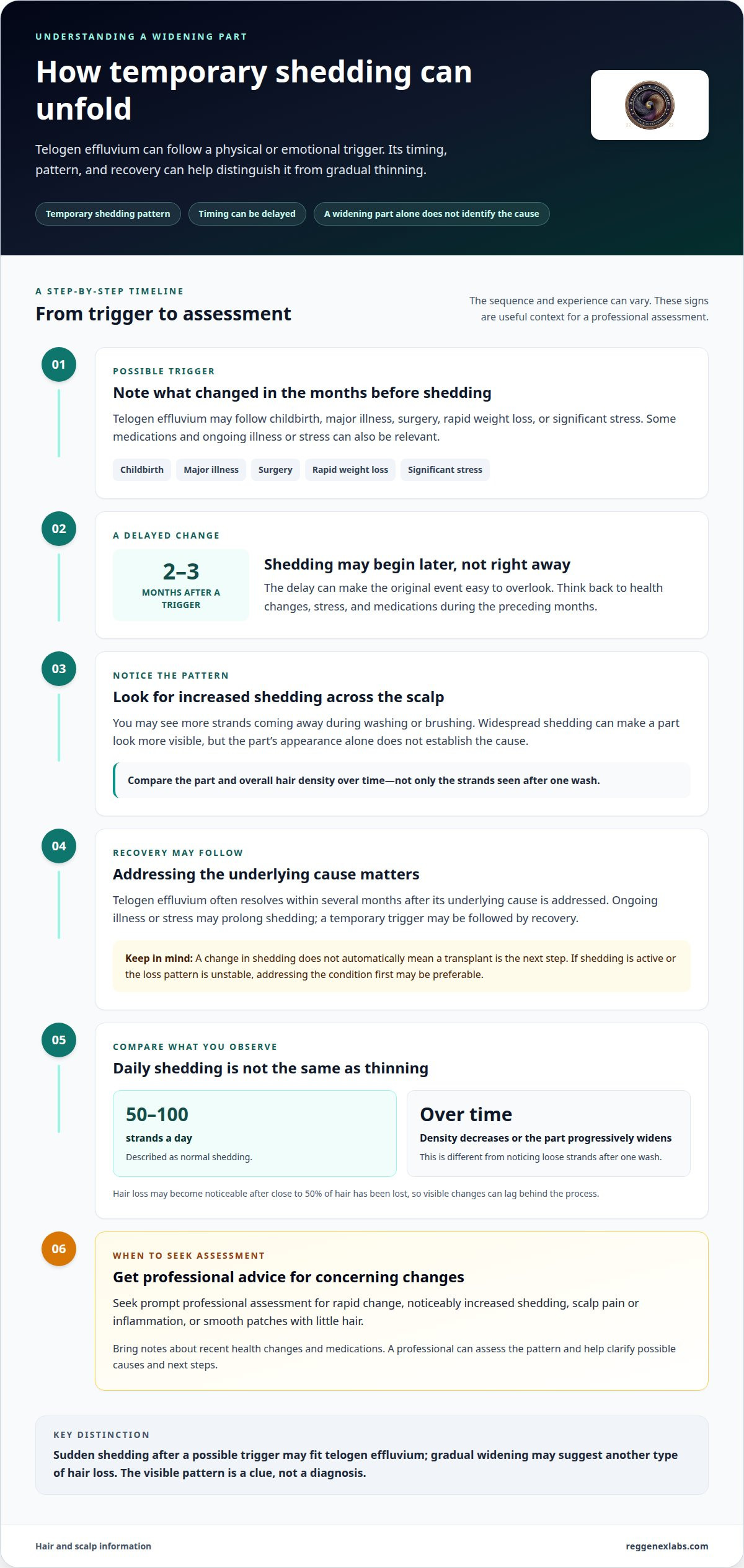
Telogen effluvium is a temporary shedding condition that can follow physical or emotional stress. Its timing and pattern can help distinguish it from gradual thinning.
Stress-Related Telogen Effluvium
With telogen effluvium, increased shedding often begins 2 to 3 months after a trigger, rather than immediately. Significant stress can disrupt the hair growth cycle, so you may notice more strands coming away during washing or brushing. The delay can make the original event easy to overlook. A widening hair part may become more visible if shedding is widespread, but the pattern alone doesn’t establish the cause.
Telogen Effluvium Triggers and Recovery
Childbirth, major illness, surgery, rapid weight loss, and significant stress can precede sudden shedding. Telogen effluvium often resolves within several months after its underlying cause is addressed. Ongoing illness or stress may prolong shedding, while a temporary trigger may be followed by recovery. Note recent health changes and medications for a professional assessment rather than assuming every episode calls for a transplant.
Normal Shedding Versus Hair Thinning
Losing 50 to 100 hair strands each day is described as normal shedding. Hair thinning is different: density decreases over time, or the part appears progressively wider. Hair loss may become noticeable after close to 50 percent of hair has been lost, so visible changes can lag behind the process. Compare the hair part and overall density over time, not just the strands seen after one wash.
Pay attention to the pattern and any accompanying signs. Sudden, heavy shedding after an identifiable trigger may fit telogen effluvium, while gradual widening may suggest another type of hair loss. Seek prompt professional assessment for rapid change, noticeably increased shedding, scalp pain or inflammation, or smooth patches with little hair. If shedding is active or the loss pattern is unstable, addressing the condition first may be preferable to considering a transplant.
Causes of a widening part
Hormonal changes, stress, illness, some medications, and inherited factors can all contribute to a wider-looking part. Thyroid conditions and polycystic ovary syndrome (PCOS) are among the medical issues associated with hair loss.
The cause matters because the same visible change can reflect different processes. A clinician considers the hair-loss pattern, scalp health, family history, medications, styling habits, and recent changes in health or stress.
Hormones, Stress, Illness, and Medications
Hormonal shifts, including those around menopause, can coincide with female pattern hair loss or diffuse shedding. Significant stress, major illness, and some medications can also disrupt the hair cycle, reduce density across the scalp, and make the part more visible. Consider when the change began: recent medication changes, illness, or stress before shedding may point to a trigger, while gradual change may fit pattern loss.
Hair follicles can also be affected by repeated mechanical tension. Tight ponytails and braids can strain the roots, and constant pulling can permanently damage follicles, causing traction alopecia in severe cases. Notice whether thinning follows the areas under the most tension. Reducing tension is a practical first step, though it won’t address hormonal or medical causes.
Medical Conditions to Check
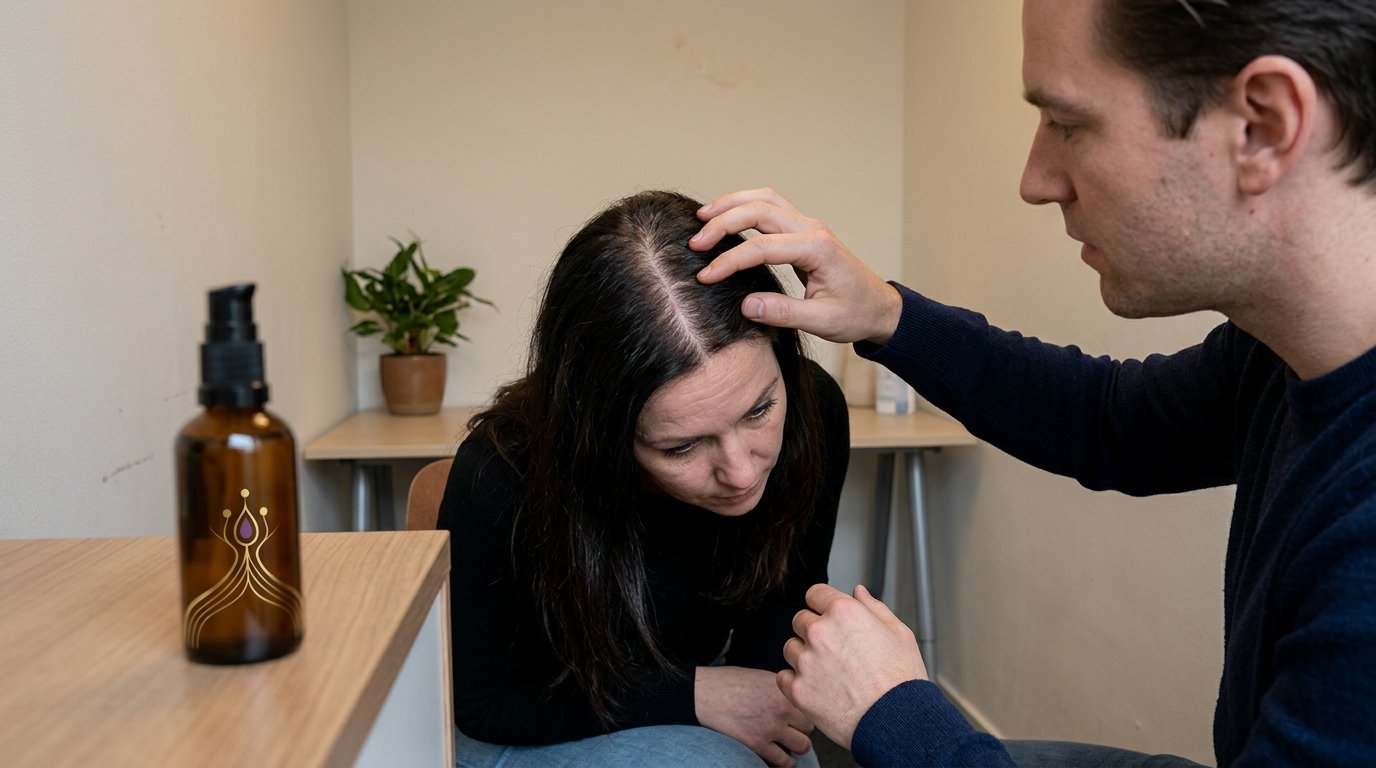
Thyroid conditions and PCOS are among the medical issues to consider when a woman develops a widening part. Nutritional deficiencies and androgenetic alopecia are other possible contributors. A medical assessment can review the scalp, variations in hair-shaft thickness, family history, medication use, styling habits, and recent health changes. These details help distinguish shedding from female pattern hair loss and guide next steps.
There is no known way to prevent female pattern baldness, so identifying changes early can help clarify what is happening. Take clear photos of your part in consistent lighting every few months, and note changes in stress, health, or medication. Seek prompt assessment for rapid widening, noticeably increased shedding, scalp pain or inflammation, or smooth patches with little hair. The pattern and timeline, not the part alone, help identify the cause.
ReggeneX Labs
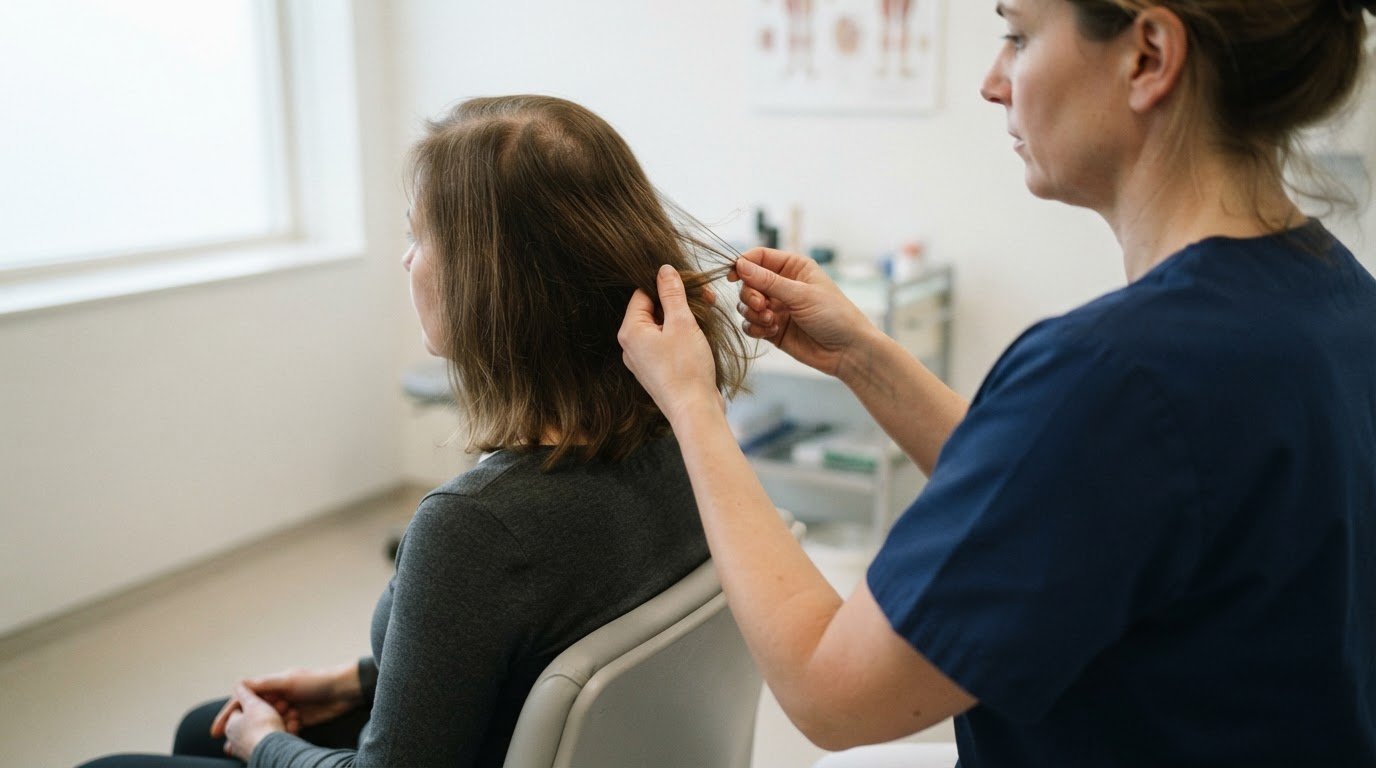
ReggeneX Labs offers a Hair & Scalp Consultation with a personalized assessment and routine recommendations for your hair-care concerns. If you’ve noticed a widening part, the consultation can help you consider how scalp care and daily habits fit into a consistent routine.
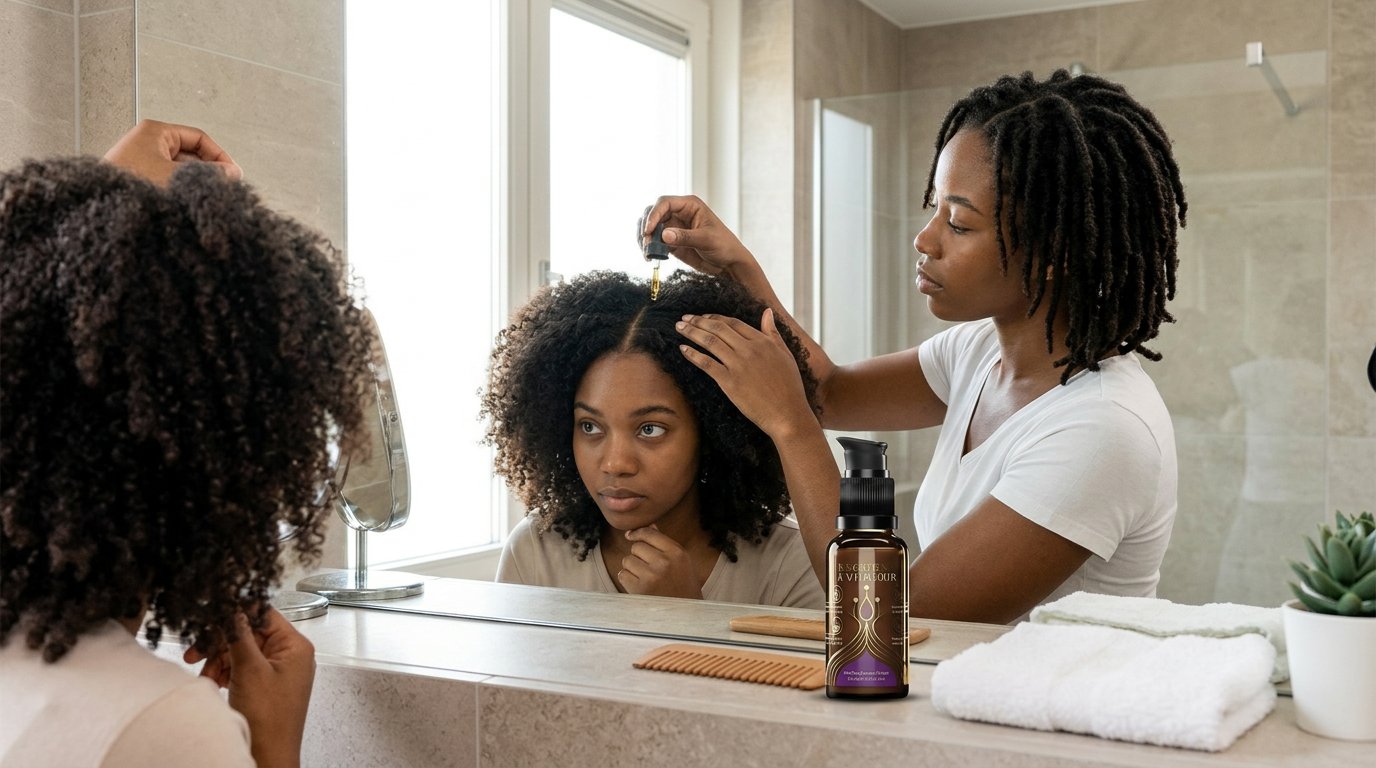
ReggeneX Labs offers Vitalixir Hair & Beard Regrowth Serum, shampoo, and conditioner to support your hair-care routine. A Hair & Scalp Consultation can help tailor recommendations to your needs. Because a widening part can have medical causes, product care does not replace professional assessment for sudden shedding, scalp symptoms, or rapid changes.
For guidance on a personalized hair-care routine, contact ReggeneX Labs.
Choose a considered next step
Understanding the causes and fixes for a widening part line in women can help you respond with greater clarity. Track how the part changes and whether shedding or scalp symptoms appear. This record can support a more focused conversation about your hair and scalp, rather than relying on styling changes alone.
ReggeneX Labs’ team can help you consider a hair-care routine suited to your concerns. For sudden or rapid changes, significant shedding, or scalp discomfort, include a healthcare professional in your next steps. Each has a distinct role: routine guidance can support consistent care, while medical assessment can investigate possible causes. Contact ReggeneX Labs to discuss your hair-care routine, and take your next step with calm, informed confidence.
Frequently Asked Questions
What Is Hair Part Thinning?
Hair part thinning means reduced visible density around the line where you separate your hair, so more scalp shows through. It may develop gradually or become noticeable after increased shedding. Compare the same part in similar lighting and with similar styling: overhead light or freshly washed, separated strands can make the scalp look more visible.
How much scalp is it normal to see through hair?
There isn’t one amount of visible scalp that’s normal for everyone. Hair density, strand thickness, curl pattern, lighting, and how closely you comb your hair can all affect how much scalp shows along a part. A brief glimpse of scalp doesn’t establish hair loss. Look for a persistent change in coverage, especially if the part appears broader in comparable photos.
What if your widening hair parting cannot be treated?
If treatment doesn’t restore density, you can still choose options that change the appearance of coverage. A hairpiece or wig can cover the area, while scalp micropigmentation uses hair-like tattoo impressions to create the look of greater density. These approaches change appearance, not hair growth. Your comfort, preferred style, and scalp condition can guide your choice.
What is a normal hair parting width?
There is no widely agreed width that defines a normal part for every woman. Some researchers consider a spread greater than 1 cm a possible indicator of patterned hair loss, but there is no broad scientific consensus on that threshold. A part that hasn’t changed in size or shape during the past 6 months is described as characteristic of a normal parting.
What is female pattern baldness?
Female pattern baldness is a form of gradual hair loss that often becomes visible along the central part. The part may widen as thinning develops around it, rather than forming a single isolated bald spot. Its appearance can differ from male pattern hair loss, so the two patterns don’t necessarily look alike. A professional assessment can help distinguish pattern loss from other causes.
When Should You Be Concerned?
Seek prompt professional assessment if your part widens rapidly, shedding noticeably increases, your scalp becomes painful or inflamed, or smooth patches appear with little to no hair. These changes deserve attention because they may point to causes beyond gradual pattern thinning. Note when the change began and any recent illness, medication changes, or major stress, as that timeline can help inform an evaluation.